Blog

  • Cyberattack in Germany: the need for robust network segmentation

    Cyberattack in Germany: the need for robust network segmentation

    On 1 September, the German Air Navigation Services (DFS) fell victim to a cyberattack targeting its internal communications system. Although air traffic was not affected and the consequences appear to be limited for the time being, this attack has highlighted a critical vulnerability. The pro-Russian hacker group APT 28, suspected of being behind the attack, is known for its cyber-espionage activities and is believed to have links to Russian military intelligence (GRU).
    This incident highlights the need to implement a strict system of segregation between critical infrastructure and office systems. Such a separation would provide better protection for vital air traffic control functions against malicious intrusions, by restricting access to sensitive systems and minimising the risk of an attack spreading. By strengthening these defences, it would be possible to prevent more serious consequences, such as disruption to air traffic or the exfiltration of sensitive data.

    https://www.lemondeinformatique.fr/actualites/lire-controle-aerien-allemand-pirate-un-cybergang-russe-soupconne-94641.html

    Credits: Le Monde Informatique

  • The new version of the HardBit 4.0 ransomware: A growing threat to corporate cybersecurity

    The new version of the HardBit 4.0 ransomware: A growing threat to corporate cybersecurity

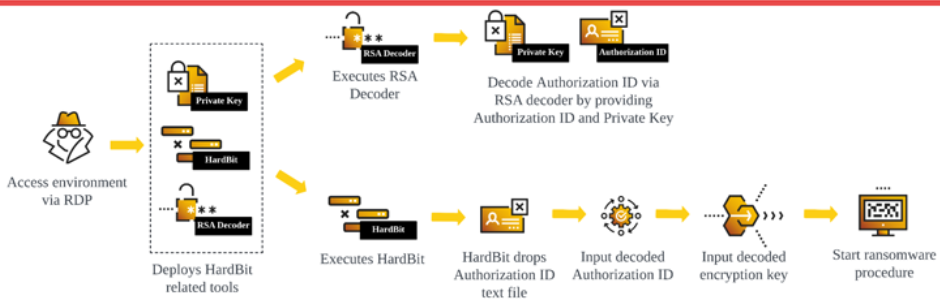
    Cybersecurity researchers have discovered a new version of the HardBit ransomware, known as HardBit 4.0, which uses password protection to evade detection. Unlike previous versions, this variant requires a password to run properly, making analysis more difficult for security researchers. HardBit, which first appeared in October 2022, is notable for the absence of a data leak site, instead threatening victims with further attacks to force them to pay.

    The initial access vector is unclear, but may involve brute-forcing RDP and SMB services. Once access has been gained, the attackers use tools such as Mimikatz to steal credentials and move laterally via RDP. HardBit disables antivirus software and Microsoft Defender services, and encrypts files on the infected host. It also offers a ‘wiper’ mode to permanently delete files. In 2024, ransomware attacks are on the rise, with significant activity from the LockBit, Akira and BlackSuit groups.

    https://thehackernews.com/2024/07/new-hardbit-ransomware-40-uses.html

    Source: The Hacker News

  • Cyberattacks: the ransomware that is crippling hospitals

    Cyberattacks: the ransomware that is crippling hospitals

    Several healthcare facilities have been hit by recent attacks: in February, the Armentières facility had 18 GB of data published after its servers were encrypted, and in May, the Simone Veil Hospital in Cannes suffered a similar attack, with 61 GB of data leaked. In 2023, reports of ransomware attacks increased, with healthcare organisations accounting for 10 per cent of victims, according to ANSSI.

    A report by CERT Santé records 32 ransomware attacks in 2023, which caused serious disruption to certain organisations. France is the European country most affected by these cyber threats, but only 27 per cent of healthcare organisations have a ransomware protection programme in place.

    The consequences are severe, with medical data being sold on the dark web. Pierre-Antoine Failly Crawford of Varonis states that a single patient record can fetch 300 euros. However, an increasing number of organisations are refusing to pay ransoms, preferring to restore their systems from backups. CERT Santé notes that healthcare organisations are stepping up their cybersecurity efforts, with a commitment to strengthening their defences.

    https://www.lemondeinformatique.fr/les-dossiers/sommaire-lire-cyberattaques-ces-ransomwares-qui-terrassent-les-hopitaux-260.html

    Credit: Le Monde Informatique

  • Ransomware: a growing threat to businesses in 2023

    Ransomware: a growing threat to businesses in 2023

    Ransomware affected three in four businesses in 2023, posing a serious cybersecurity problem. According to the Veeam 2024 Ransomware Trends Report, only 57 per cent of compromised data is restored, leaving 43 per cent irrecoverable.

    These attacks cause system failures and downtime, having a significant impact on businesses. The pressure on IT and security teams is mounting, with 45 per cent of professionals reporting increased stress and 26 per cent a loss of productivity. Despite the need for an effective cyber defence strategy, 63 per cent of companies regret the lack of coordination between backup and cyber risk teams.

    A majority of 81 per cent of businesses paid ransoms, but a third did not recover their data after payment. Cyber insurance, taken out by 86 per cent of companies, covers only 62 per cent of the costs associated with attacks. Data stored in the cloud is just as vulnerable as on-premises data, highlighting the need to improve IT infrastructure to prevent cyberattacks.

    https://itsocial.fr/enjeux-it/enjeux-securite/cybersecurite/les-entreprises-continuent-a-etre-fortement-impactees-par-les-ransomwares/

    Credit: IT Social

  • "Black hat AI" versus "White hat AI" – which will win?

    "Black hat AI" versus "White hat AI" – which will win?

    Given the capabilities of AI, which are a double-edged sword – equally powerful for launching attacks as for defence – should we take preventive measures or continue to leave our critical assets exposed?

    "Black hat AI" versus "White hat AI" – which will win?

    Is it a matter of urgency to stop leaving critical or sensitive assets accessible, protected solely by software security, or should we wait and hope that the positive uses of AI will outweigh the negative ones?

    An excellent article by OnePoint, written in collaboration with EGE’s business intelligence experts on this topic.

    https://www.groupeonepoint.com/fr/nos-publications/intelligence-artificielle-et-cybersecurite-risques-ou-opportunites/

    Credit: Onepoint

  • The new recommendations regarding backup policy: moving away from the 3-2-1 strategy, which is no longer sufficient, towards the robust 3-2-1-1-0 strategy.

    The new recommendations regarding backup policy: moving away from the 3-2-1 strategy, which is no longer sufficient, towards the robust 3-2-1-1-0 strategy.

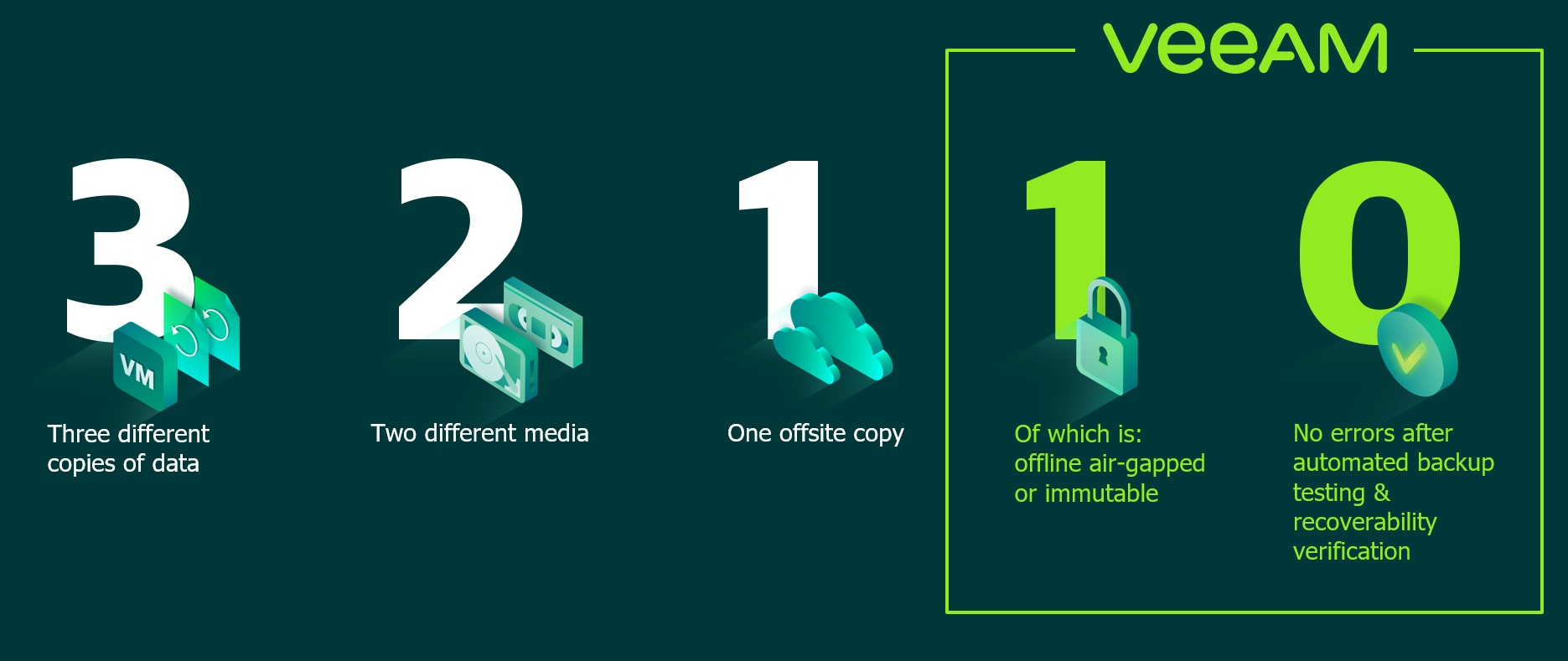
    The 3-2-1 rule recommended three copies of data across two different media types, with one copy stored off-site. Originally proposed by Peter Krogh, this rule needs to be adapted to reflect current risk trends. In an ever-expanding and interconnected digital landscape, more advanced backup strategies are emerging to meet these needs. Veeam promotes the 3-2-1-1-0 rule, which fulfils the objective of ensuring data recovery through the diversification of storage copies. By incorporating these principles into their practices, organisations can guarantee the security and availability of their data in a dynamic digital environment.

    Recommendations 3-2-1-1-0:

    – 3 copies of the data

    – Across two different media

    – Including 1 off-site copy

    – And a physical copy that is offline

    – And no errors during the restoration tests

    https://www.veeam.com/blog/321-backup-rule.html

    Credit: Veeam